Our Vehicles
These are just some of the ex-military vehicles that members of the Military Vehicle Trust's North Staffs Area own. To have your vehicle added to this page, please send one or two photos in JPG format via the yellow button. Phone camera pictures are fine.
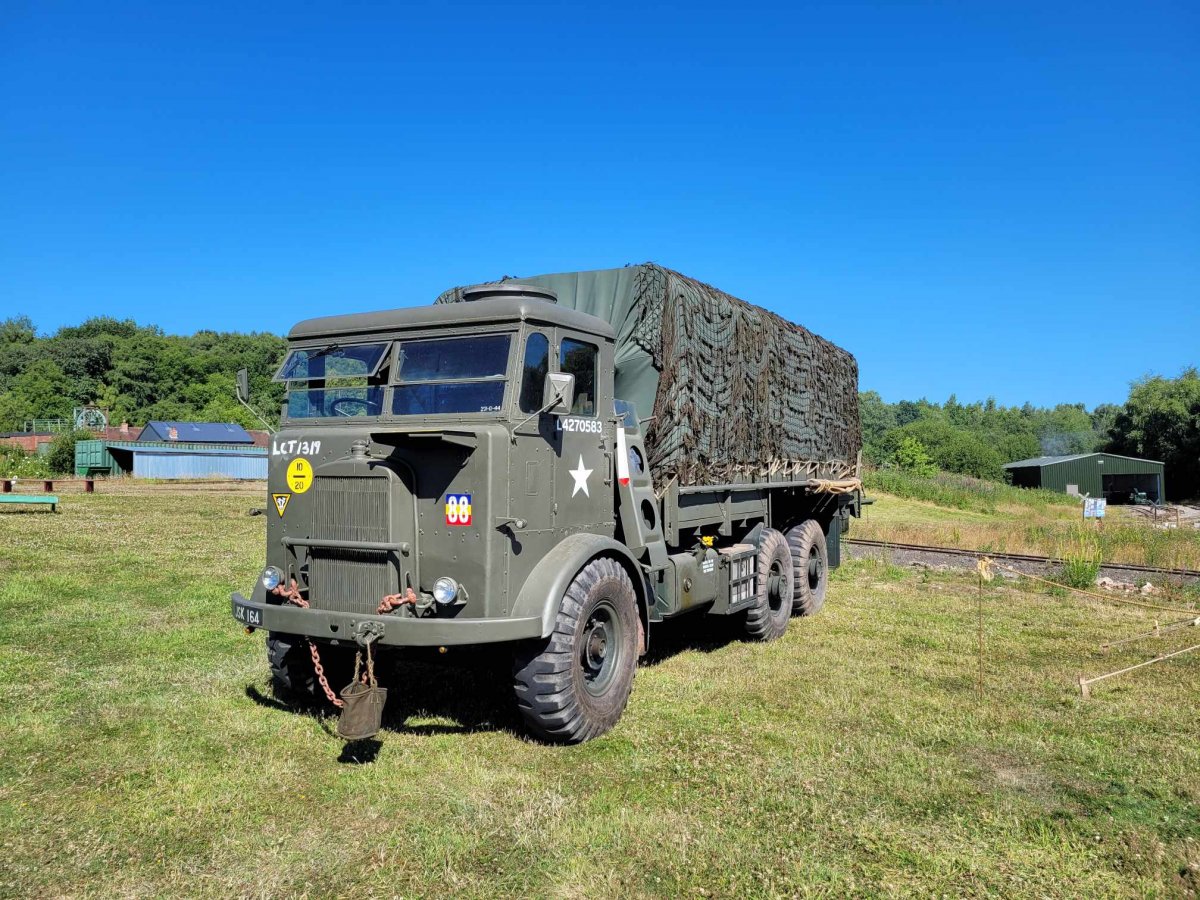
Darren Compton
Leyland Hippo - The Leyland Hippo was designed to carry heavy loads from the Normandy beach bridge heads to the front lines. Whilst the majority built had the general service body, the hippo was also built as a radio truck and a fuel bowser. The Hippo design is based on an earlier civilian truck, refitted for military purposes.
This particular vehicle was used in WW2 as part of the 69th Infantry Brigade heavy workshops attached to the 79th Armoured Division. This Division was better known as ‘Hobart’s Funnies’. The 79th operated various specialized armoured vehicles including bridge laying tanks, flame thrower tanks, mine detecting / destroying tanks and amphibious tanks. Following its participation in the invasion of Normandy, this vehicle was then sent to Northen Italy in 1945.
This vehicle was found derelict in May 1983 and was purchased from the Ruddington sales by Phil Palmer for £200.00. After 38 years, ownership passed to Darren Compton in February 2020.
Of the 1000 Hippos built, only 9 remain on the road today.
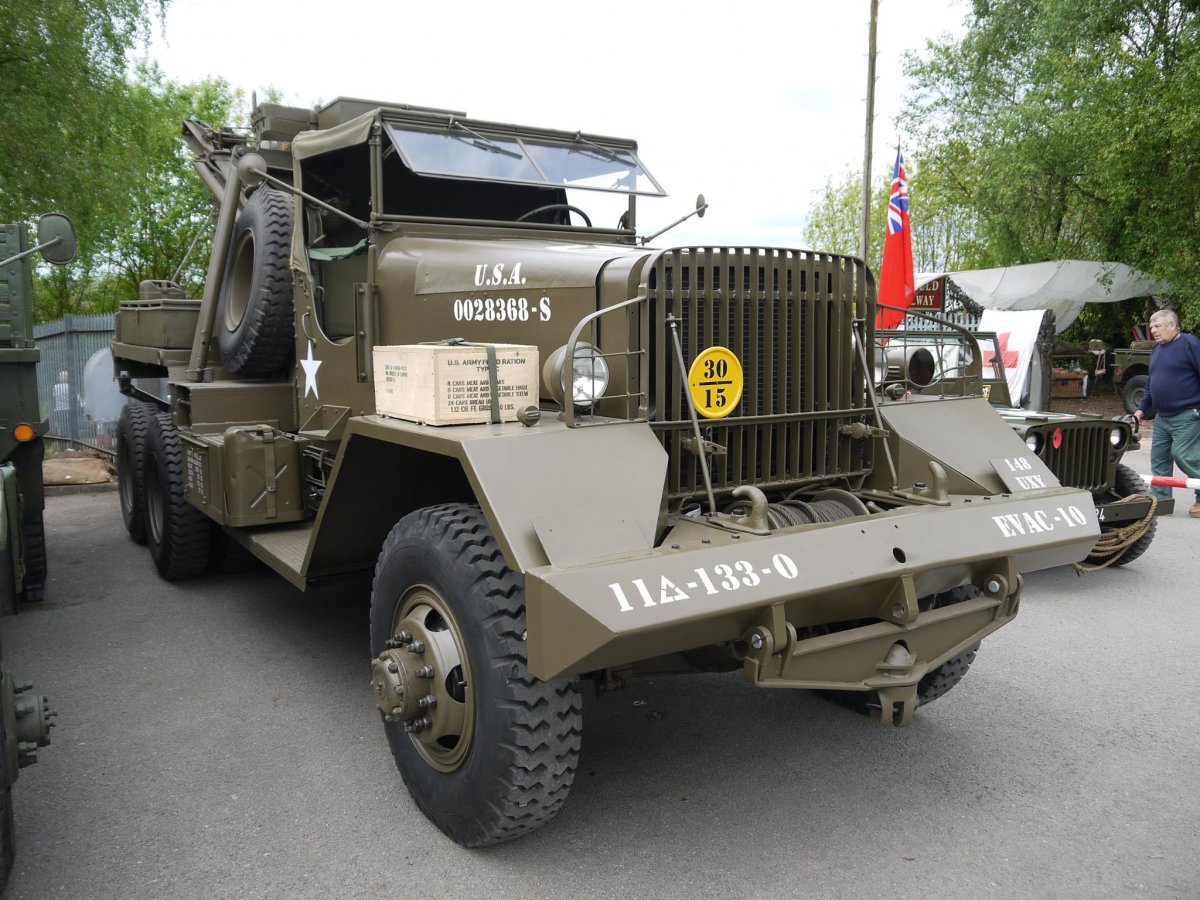
John Keeling
Ward La France - Designed to recover tanks and heavy vehicles, the fully kitted M1A1 arrived at the scene ready for work with a vast toolkit, all the heavy wrecking gear you could ask for and welding gear. Featuring outrigger jacks, front (20,000lb) and rear (30,000 lb) winches and a powerful slewable crane, the M1A1 was capable of recovering almost any other vehicle.
Able to tow a tank on an “A” frame, bizarrely the M1A1 is actually only rated as a 6 ton wrecker. This is actually decided by the lift capacity rating of the crane – but in reality this was often exceeded.

Simon Henson
1945 Ford GPW - This Jeep represents one operated by the USAAF 8th Air Force, 453 Bomb Group, which was based at RAF Old Buckenham airfield in Norfolk. 453 Bomb group had four squadrons consisting of the 732nd, 733rd, 734th and 735th Bombardment squadrons.
The unit operated the Consolidated B 24 Liberator bombers. Notable personnel included actors Major Jimmy Stewart, the Group Operations Officer, who flew at least 24 combat missions and Radioman/Air gunner, Staff Sergeant Walter Matthau.
This particular Jeep was built in February 1945 by the Ford Motor company, under licence to Willys Overland and it has many parts stamped with the Ford F symbol.
Shipped to Europe too late to see active service, this jeep was gifted to the French Army, as was a considerable amount of US equipment. Use by the French Army is not known; however, it was rebuilt at some time as it has a Hodgkiss body tub, French wheels and French glass in the windscreen.

Steve & Wendy Clarke
Willys MB - Owned by long term North Staffs MVG members Steve & Wendy Clarke, this jeep was purchased in September 2023 after standing for 4 years. After several months of hard work, it is now ready to make it's show debut in the 2024 season!

Tony Wilcox
1942 Willys Jeep - This particular Jeep was built by Willys Overland in 1942 and was reconditioned in the French Hotchkiss factory in 1958. Originally owned by North Staffs MVG founding member Ray Wilcox, this vehicle is now displayed at events in his memory by his son, Tony.

David & Maria Glover-Oakes
Willys MB
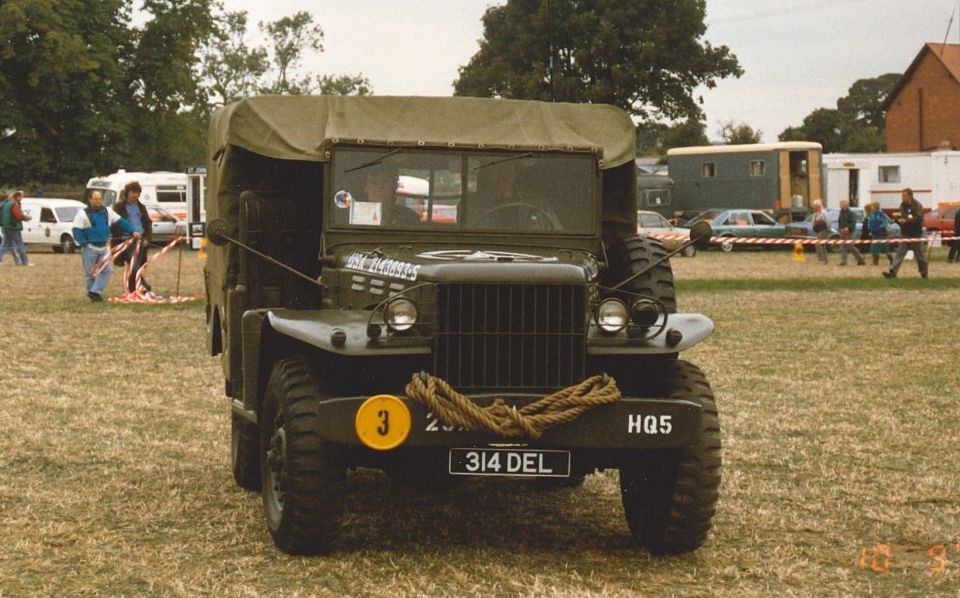
Margaret & Stan Ikin
Dodge WC51
Rob Brindley
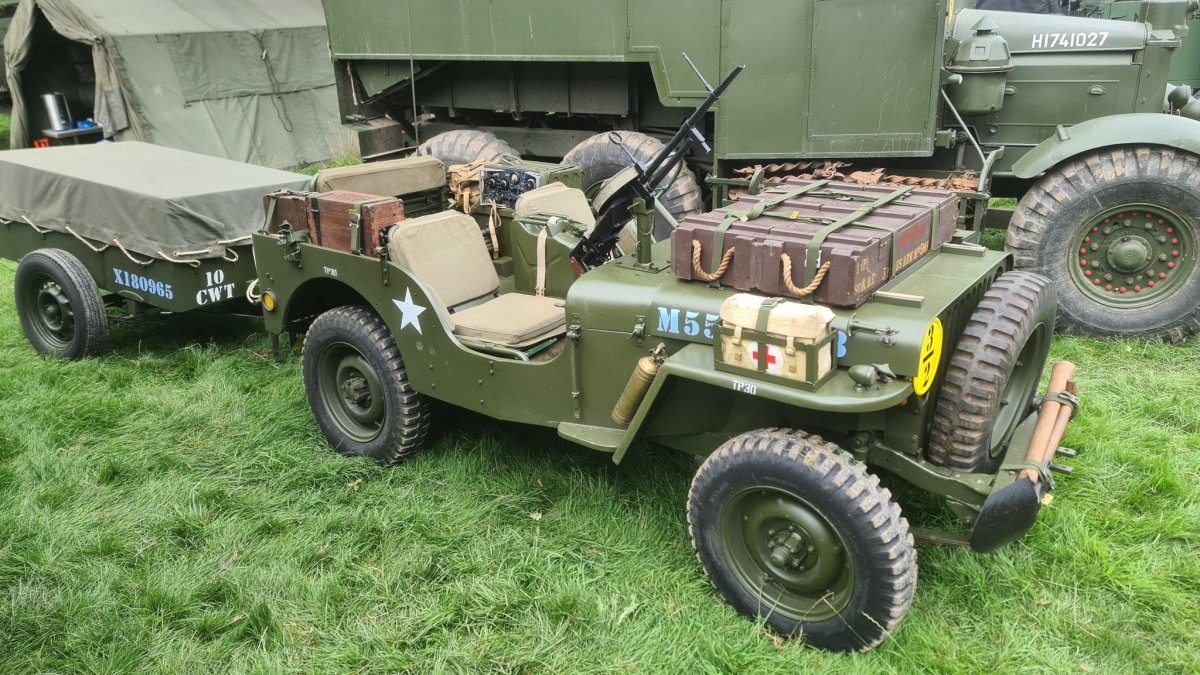
1941 Willys MB - This vehicle represents a Jeep of the 1st Airborne Reconnaissance Squadron. British Airborne Jeeps featured several modifications to reduce weight and shorten the overall length of the vehicle to enable transportation by the Mk I Horsa Glider.
The modifications included the cutting down of the front bumper, removal of the spare wheel mount, Jerry can holder and bumpers from the rear of the vehicle, all grab handles removed, a centre boss added to allow for easy removal / refitment of the steering wheel and the relocation of the spare wheel to the front bumper.
The Reconnaissance Squadron further modified their Jeeps with the fitment of the Vickers K machine gun which necessitated the removed of the front screen.
The airborne divisional sign and the Reconnaissance Squadron flash appears on both the front and rear of the Jeep. Additionally, in the centre of the spare wheel, is an olive drab plate bearing a white circle enclosing the number 29. This identifies the Jeep as being assigned to ‘C’ Troop.
John Keeling
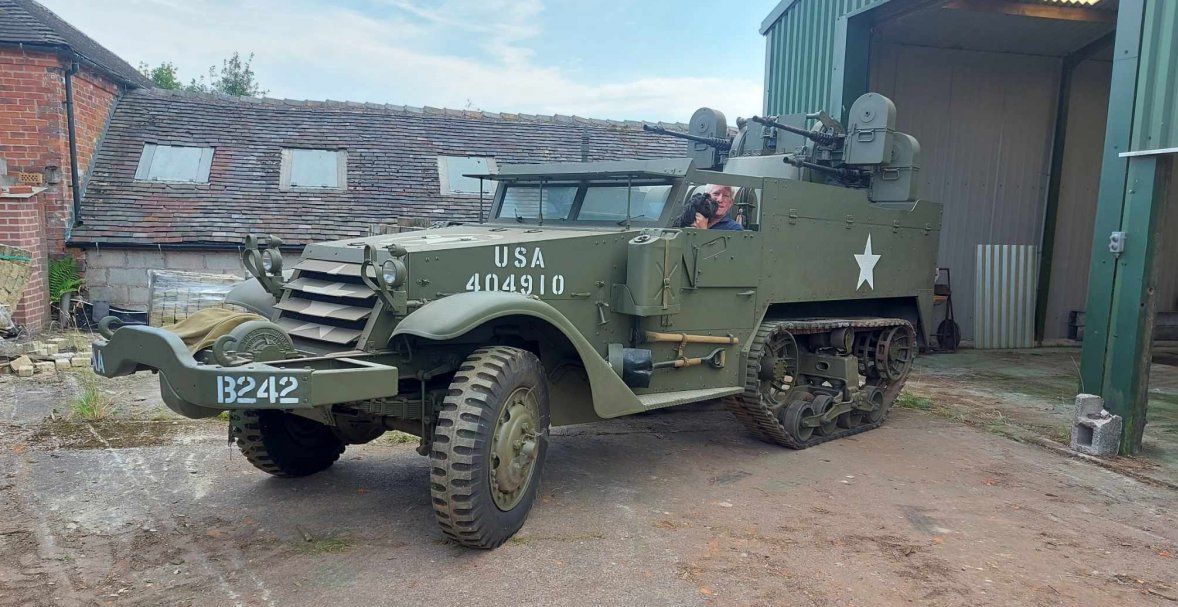
M16 Half-track - The M16 Multiple Gun Motor Carriage, also known as the M16 half-track, was an American self-propelled anti-aircraft weapon built during World War II. It was equipped with four .50 calibre (12.7 mm) M2 Browning machine guns in an M45 Quadmount. 2700 were produced by White Motor Company from May 1943 to March 1944, with 568 M13 MGMCs and 109 T10 half-tracks being converted into M16s as well.
Tony Wilcox
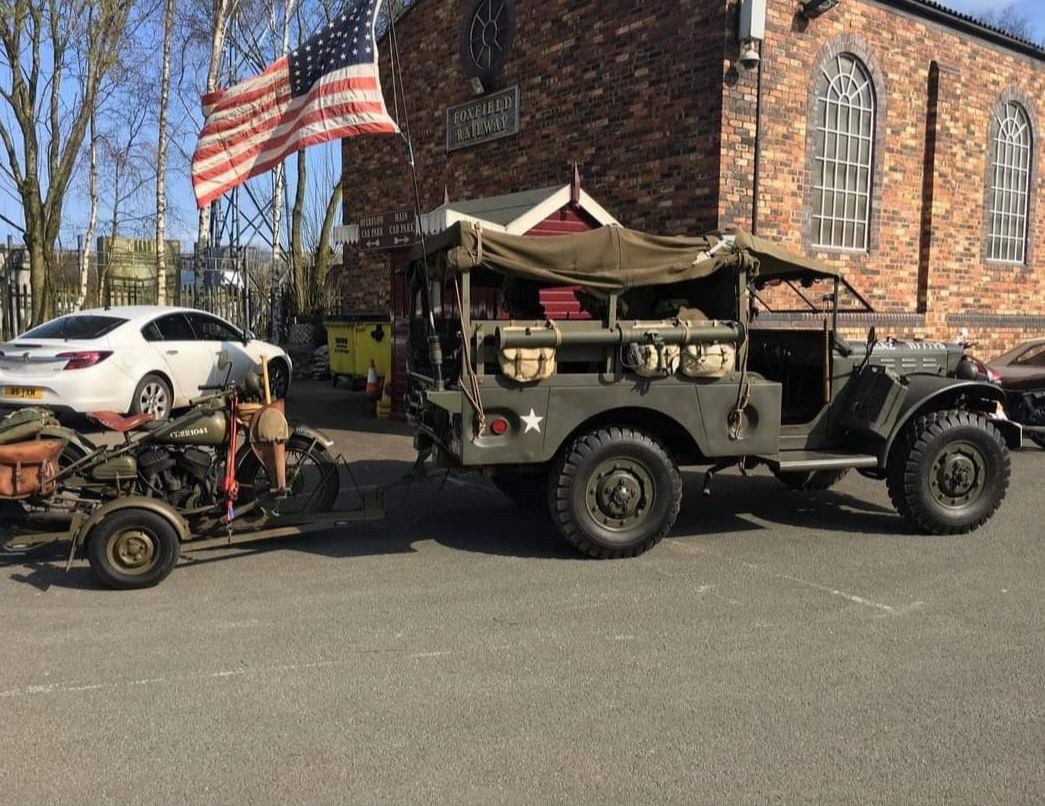
Dodge WC - The Dodge WC series, sometimes nicknamed “Beeps”, was a range of light military trucks produced by Dodge during World War II. Standard vehicles in the ¾ ton 4×4 class were the WC-51 / WC-52 Weapons Carrier, Telephone Installation Trucks, WC-53 Carryall, and the WC-54 Ambulance. In the cargo trucks, the WC51 was identical to the WC52 but did not have the front bumper-mounted winch.
1943 Harley Davidson - This particular bike has a special place in the heart of the North Staffs Military Vehicle group as it was owned by, founding member, Ray Wilcox. Now owned by his son, Tony, this bike is lovingly displayed in memory of Ray.
1943 Harley Davidson - This particular bike has a special place in the heart of the North Staffs Military Vehicle group as it was owned by, founding member, Ray Wilcox. Now owned by his son, Tony, this bike is lovingly displayed in memory of Ray.

John Keeling
Dodge WC63 - The Dodge WC62 is based on the Dodge WC51. At one point during World War II, the US army needed a vehicle which could carry more soldiers than the WC51 could do. The WC62 was designed as a stretched WC51, with a extra axle.
On the road the WC62 is a 2 wheel drive vehicle. The front axle and the 3rd axle can be powered (separately) when driving off-road. So the vehicle can be driven in a 6x2, 6x4 and 6x6 formula.
Darren Compton
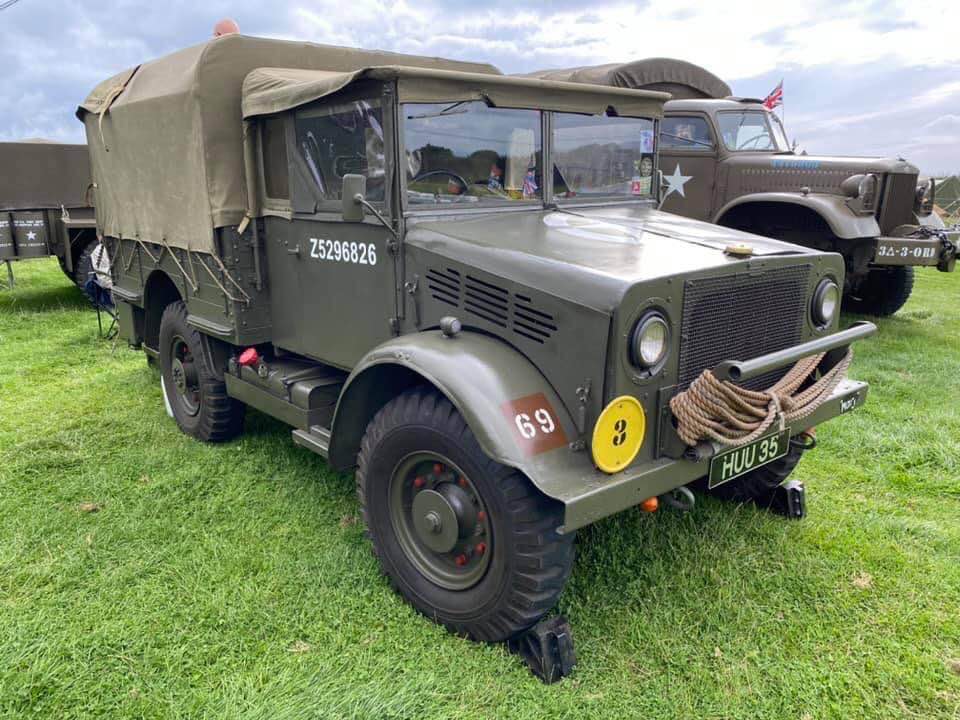
1944 Bedford MWD - This Bedford was built under contract number S3512 in 1944 and was delivered into service in 1945. Unfortunately, the military service history is largely unknown, but we do know that this vehicle was assigned to the Army Kinematograph Service. This service provided education films and talks to troops – no subject was off limits!
Postwar, the vehicle was sold to Harringay Council and was also used as an AA approved recovery vehicle for a garage located in Shoreham-By-Sea, West Sussex.
After falling into disrepair, the vehicle was recovered and restored by Jim Fleet before ownership passed to George Edwards in 2015. George kept the vehicle for 9 years before selling to Darren in 2024.
This vehicle wears the markings of the British 3rd Div. KSLI. Kings Shropshire Light Infantry in 1944. 3rd Division was the first British formation to land on Sword beach on D-Day.
Following the successful invasion of Normandy, 3rd Div went on the fight in both Belgium and Holland as the allies advanced towards Germany in the closing months of the war.

Andrew Cotton
1941 Bedford MWD - Built in 1941, this early MWD features an original ‘dropside body’ – A feature carried over from the MWG variant which allowed either a QF 2 Pounder or a 200 Oerlikon Portee to be fitted in the rear bed.
Somewhat unusually, whilst in service, this particular vehicle has been fitted with foldup / removable bench seats and aluminium wheel wells. There is also a large vacuum tank and air line sockets at the rear of the vehicle to enable it to tow large trailers – similar to the ‘Queen Mary’ type.
Post war, the vehicle was sold into civilian use and was first registered for the road in 1955. Unbelievably, Andy is in possession of every tax disc from 1955 until it was put into storage in 1965. The vehicle remained in storage until Andy Purchased the project in 2010. After 45 years of storage, the vehicle drove onto the trailer under it’s own power (although the brakes left a little to be desired).
Under Andy’s ownership, an effort has been made to preserve as much original material as possible. Since owning the vehicle, Andy has completed over 10,000 miles with several trips to both Holland and France over the years.
Rob Brindley
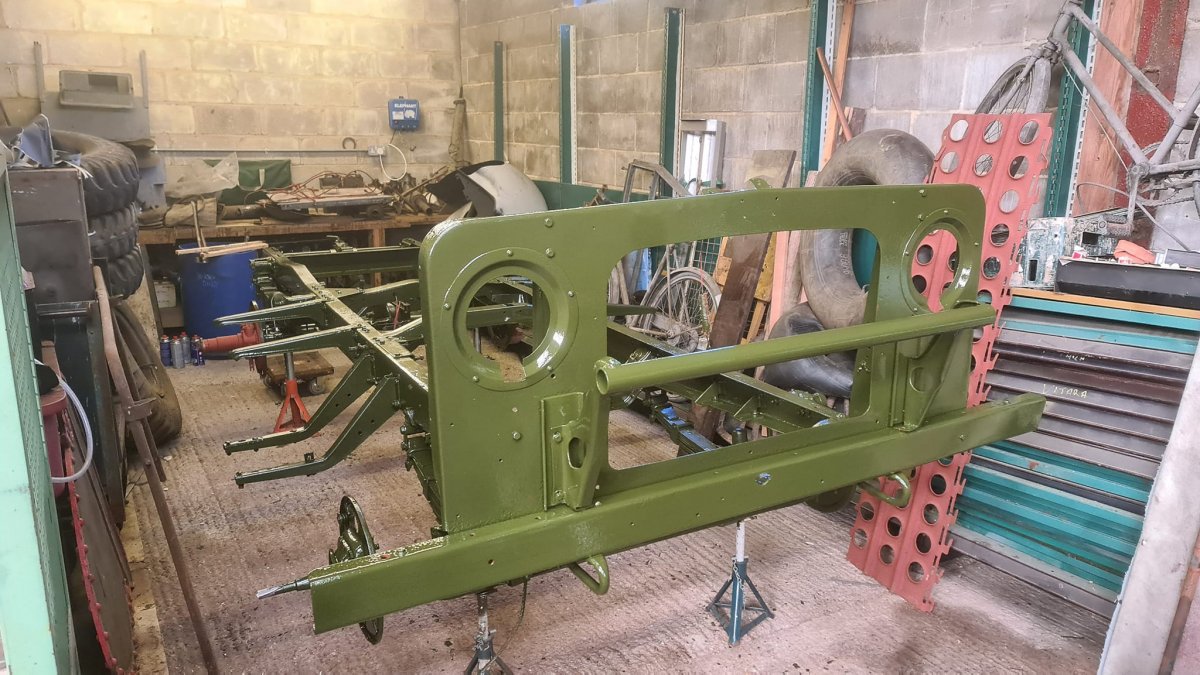
1943 Bedford MWR - Currently, in the middle of a major restoration, this Bedford MWR has been in Staffordshire since it left military service on 19/04/61. Used as a recovery truck by Alf Hissey for over a decade, the vehicle was eventually disassembled and put in to storage before ownership passed to Rob & Paul Brindley and a full restoration began. The hope is to have this vehicle on the road for the 2025 show season.
George Edwards
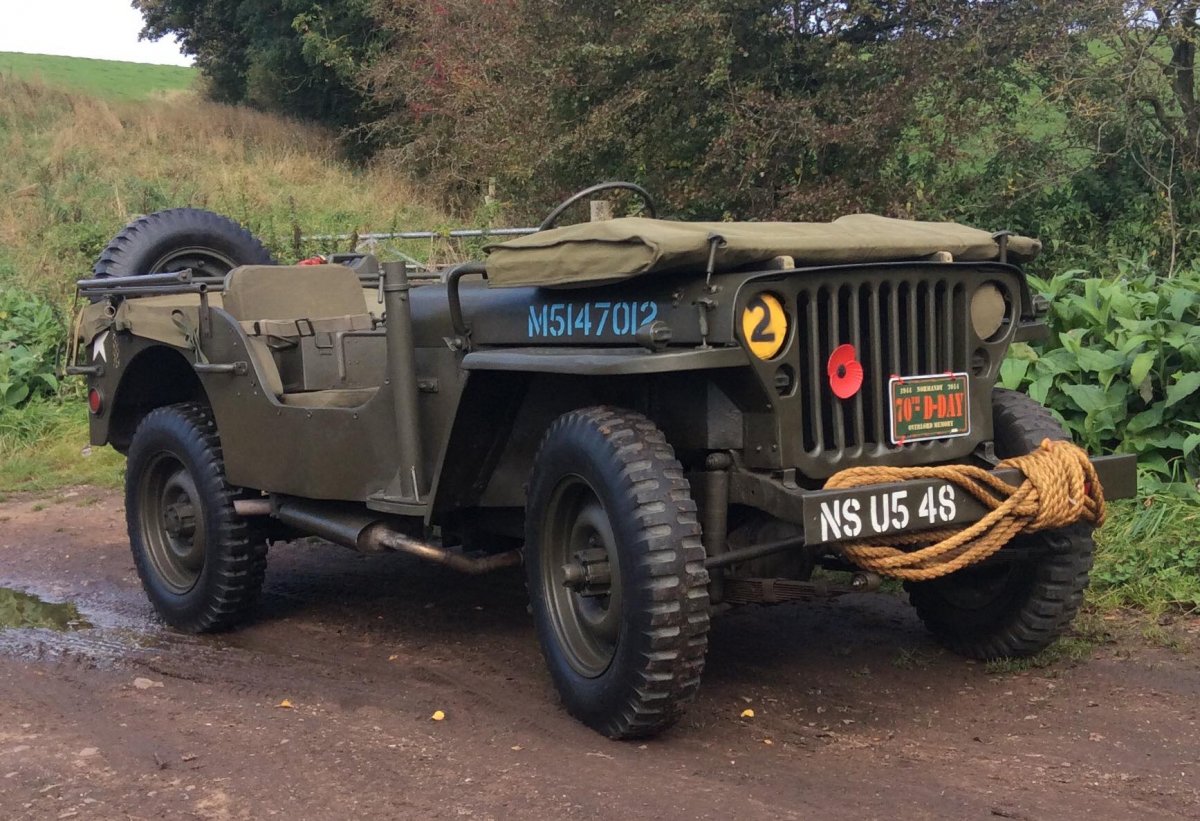
1942 Willys MB - Built in 1942, this Jeep has a Willys built chassis and body tub, but a Ford built engine, gearbox & transfer box. As more Jeeps were required than Willys Overland could realistically produce, Ford Motor Company were tasked with producing additional vehicles with their manufacturing expertise. During this period, it was not uncommon for Jeeps to leave the production line with a mix of Willys & Ford Parts. Whilst not the most reliable for starting, this Jeep retains the original 6v ignition system.
The black & red triangle identify this vehicle as being part of the British 3rd Div with the white 69 on a brown background denoting the Kings Shropshire Light Infantry, 2nd Battalion, 185th Infantry Brigade in 1944. 3rd Division was the first British formation to land on Sword beach, Queens Sector, Red, on D-Day as part of ‘Operation Overlord’.
Following the successful invasion of Normandy, 3rd Div went on the fight in both Belgium and Holland as the allies advanced towards Germany in the closing months of the war.
Dave Harper
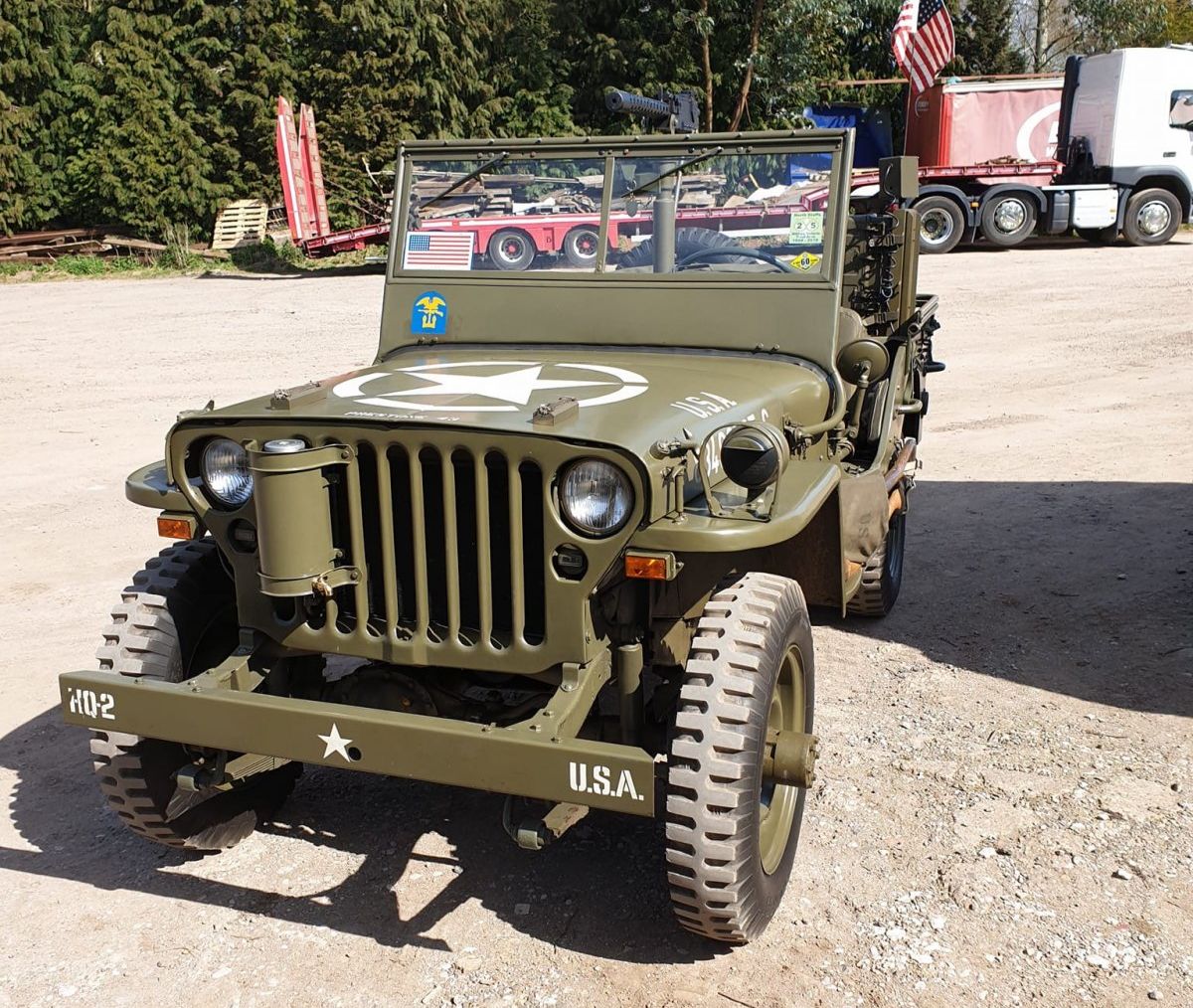
1942 Willys MB

Rob Brindley
1943 BSA M20 - This motorcycle represents a BSA M20 of the 1st Airborne Reconnaissance Squadron and is painted up as such to complement our Willys Jeep which shares the same unit markings. Unlike other vehicles used by the squadron motorcycles were kept in their standard form and were not modified in any way.
The insignia painted on the fuel tank are of the airborne forces “Pegasus” which depicts Bellerophon riding the winged horse “Pegasus”. Also, the Green/Yellow square, split diagonally, with the unit designation “41” depicting that this motorcycle has been assigned to the 1st Airborne Reconnaissance Squadron.
As a footnote: This particular M20 is one of the very last to have been sold off by the British Army and is unusual in having a 1940 dated engine in a 1943 dated frame. In order to highlight the fact that this is quite possibly one of the longest serving WD M20’s to be used by the army and is still in use today we have decided to retain its’ original 1971 registration number from when it was first released.
Dave Chipling
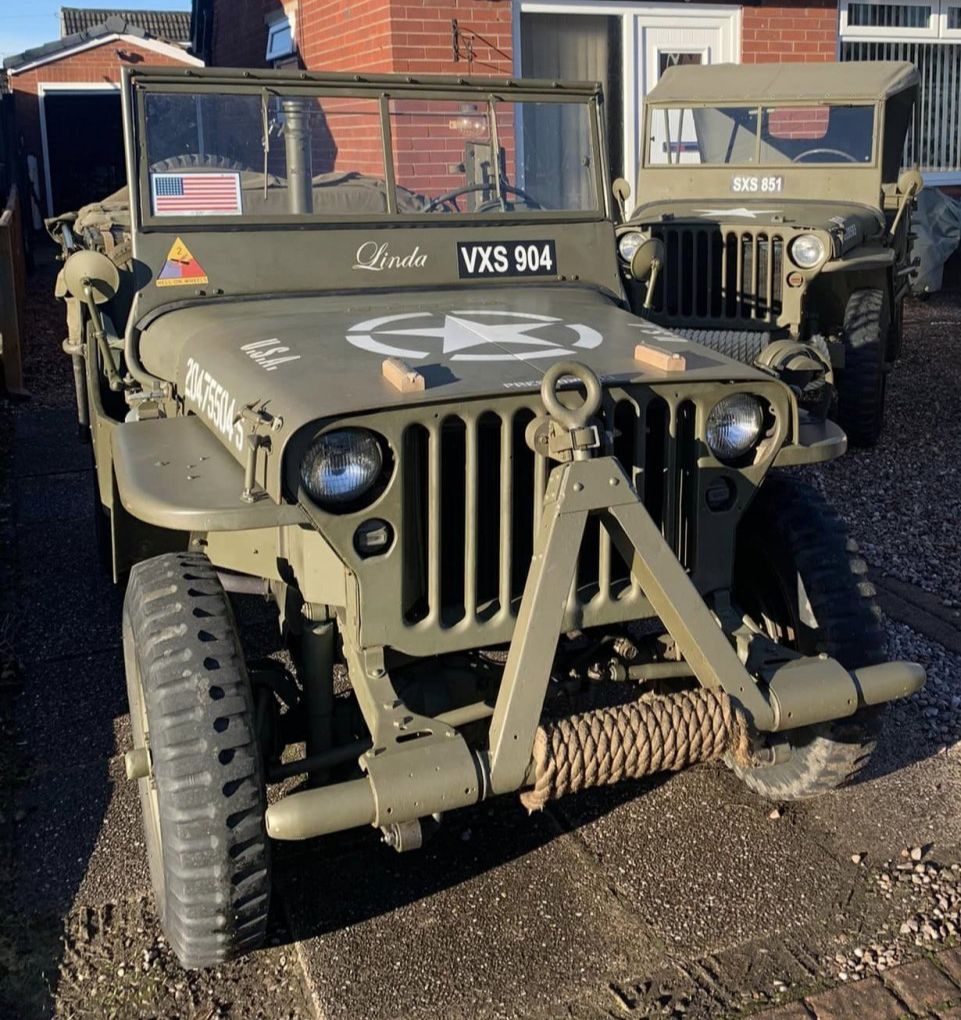
Willys MB

Bill Tomlinson
1943 Willys MB
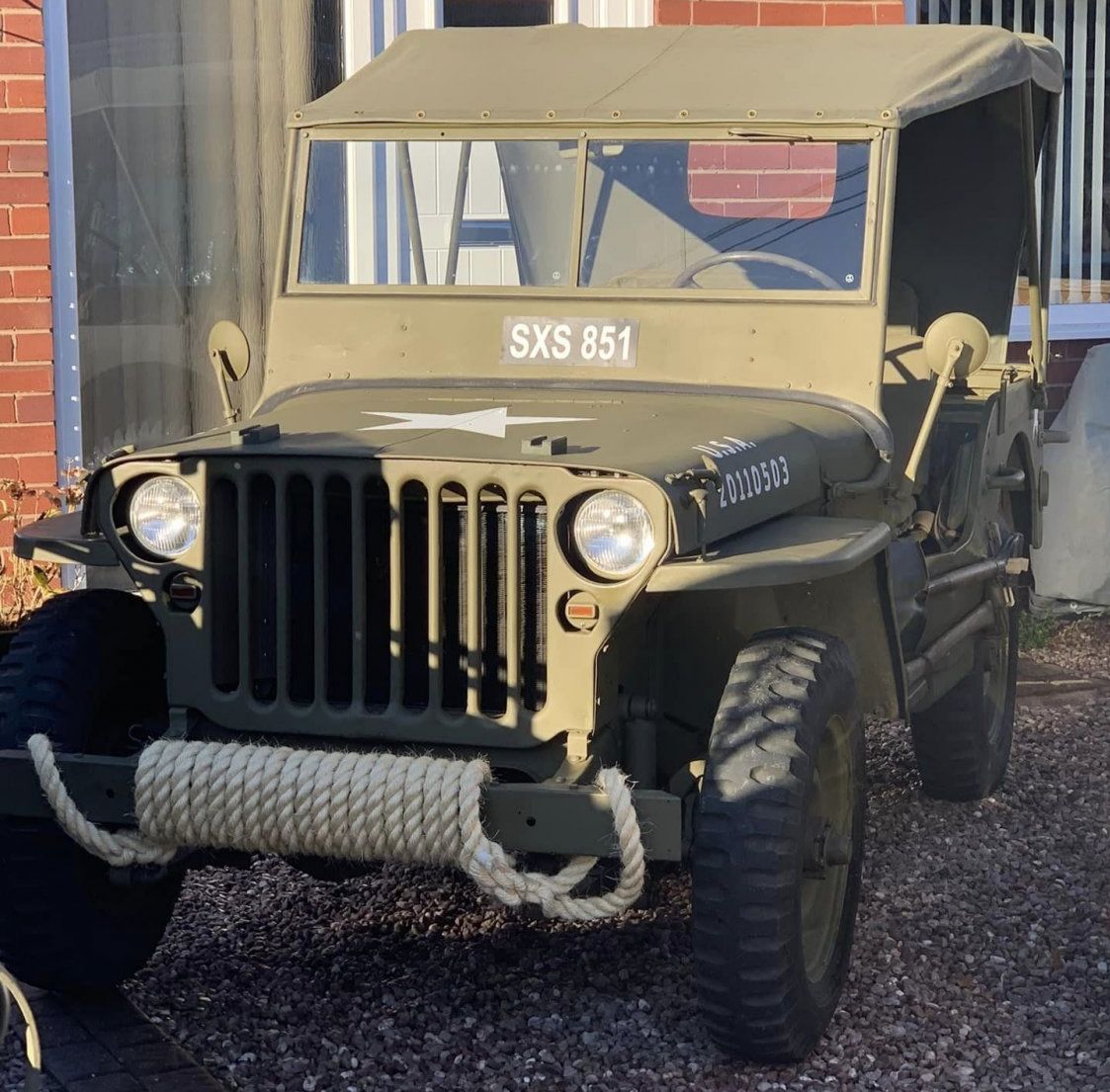
Linda Chipling
Ford GPW
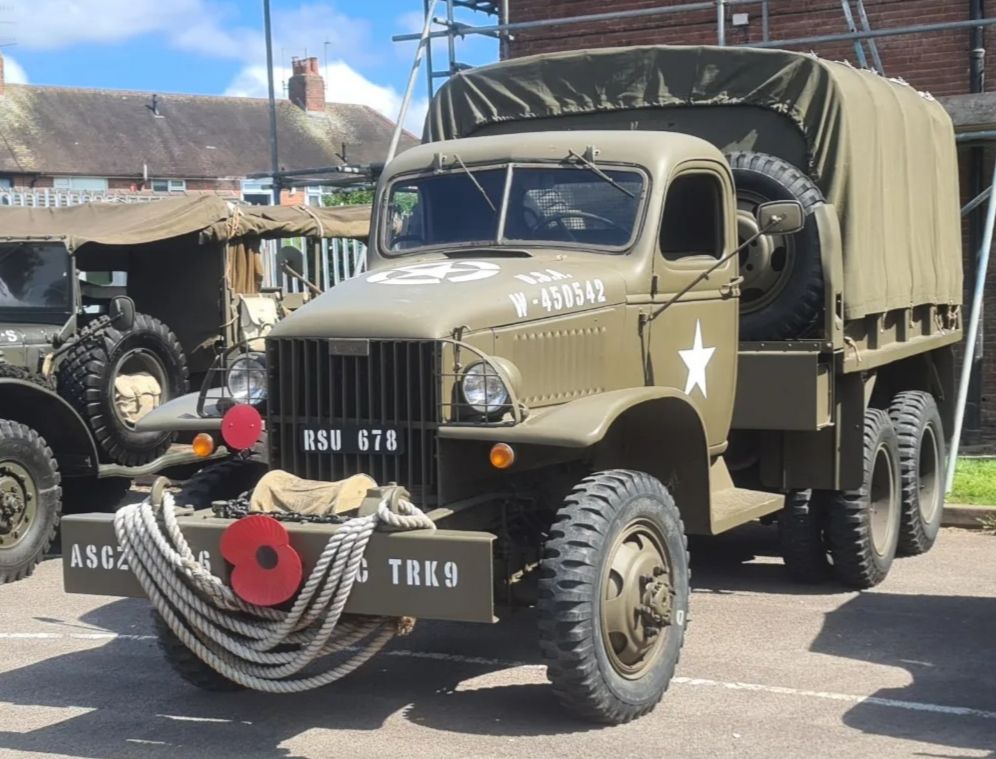
John Keeling
GMC CCKW 352
David Ford
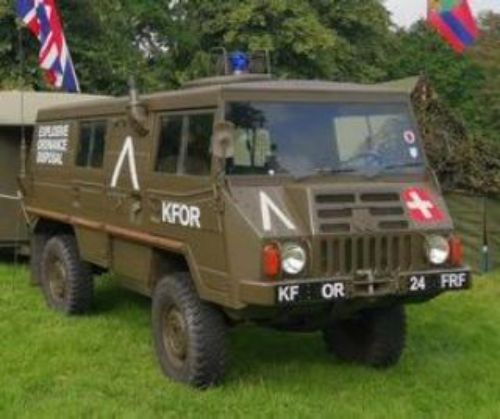
1972 Pinzgauer - This particular example was originally built in Austria by Steyr Daimler Puch in 1972 for the Swiss Army and features a 2.5L petrol engine that can also run on LPG.
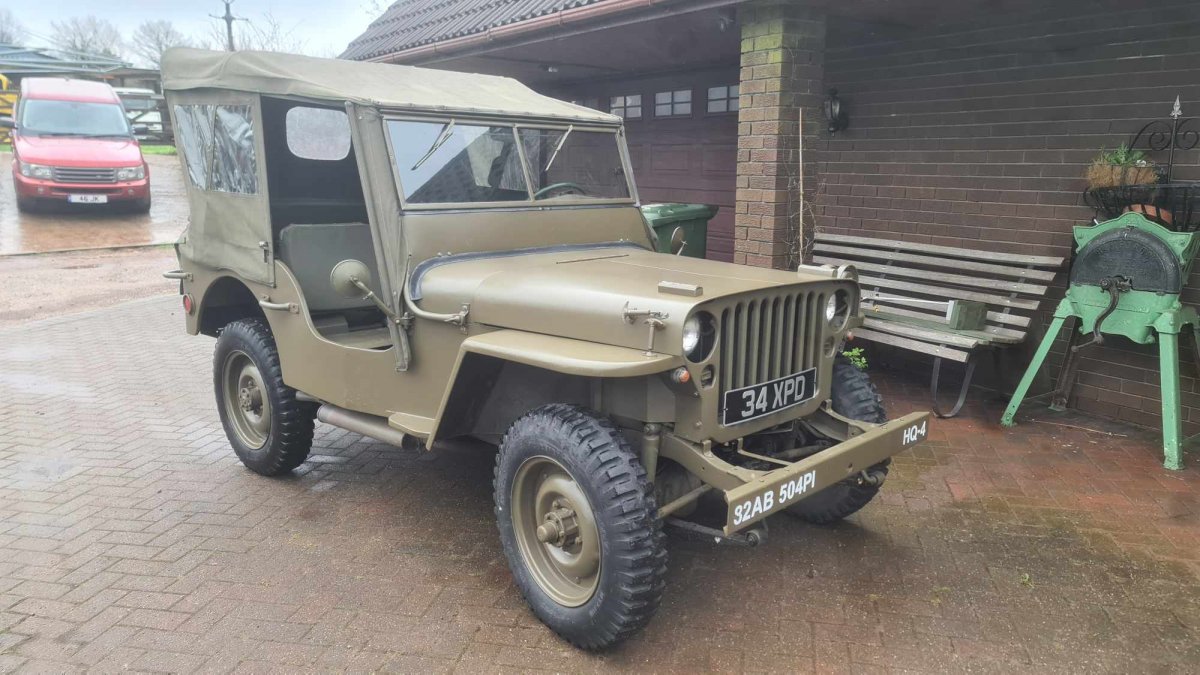
Andrew Cotton
Willys MB
Dan Ainsworth
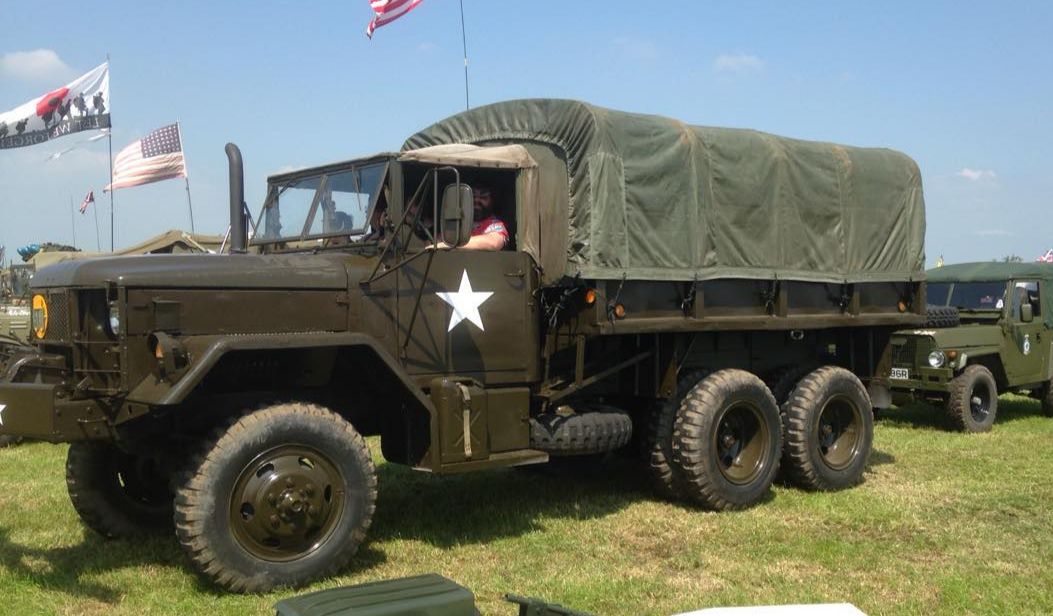
M54 Reo

Dave Harper
GMC CCKW 353
Rob Brindley
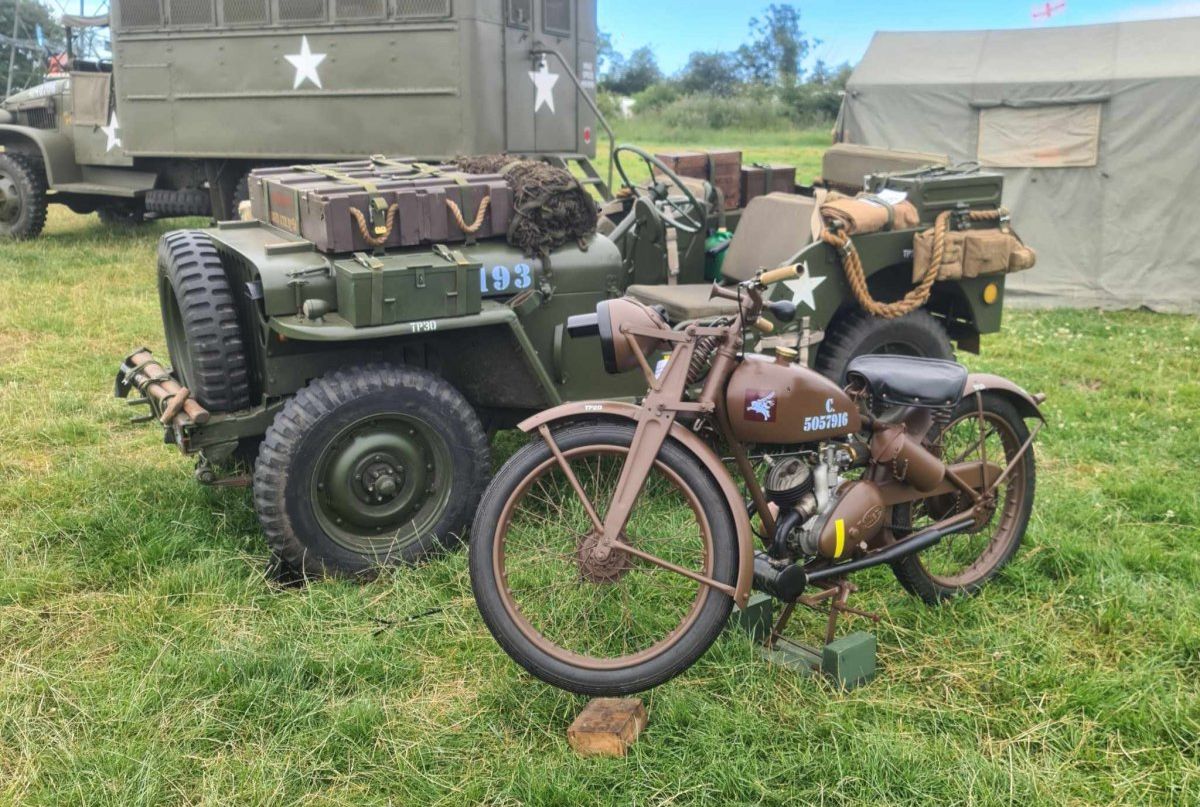
1946 James ML - Whilst not a wartime bike, this motorcycle has been returned to as close to wartime specification as possible. This included the removal of the pannier racks, mudguards cut down to the original military length, folding footrests fitted, decompressor valve fitted and a full repaint in to “Service Brown”. The markings applied represent a vehicle of the 2nd Parachute Battalion, during World War 2.
The insignia painted on the fuel tank are of the airborne forces “Pegasus” which depicts Bellerophon riding the winged horse “Pegasus”, and the light Blue “56” on a Cobalt Blue background denotes that this particular vehicle is assigned to ‘2 Para’.
Each unit was assigned a number with their own backing colour to assist in identification to the troops without giving away any information to the enemy.
The census number on the fuel tank is not a known number for a wartime ML but is instead a tribute to L/Sgt. J.D. Baskeyfield V.C. who was awarded the Victoria Cross posthumously after Operation Market-Garden. The number is L/Sgt Baskeyfields’ service number.
Pete Turner
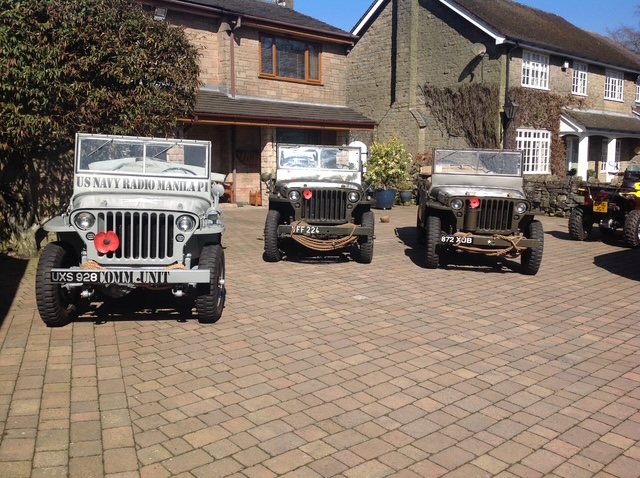
Ford GPW in U.S Navy Markings, imported from the USA.
Willys MB
Ford GPW.